Look for Taurid Fireballs in the Dim Moonlight Before Dawn on November 6 and 13
Key Takeaway
Taurid fireballs are worth watching for in the nearly moonless hours before dawn on November 6 and 13. The South Taurids peak at 03:45 on the 6th and the North Taurids at 03:02 on the 13th, (KASI table).
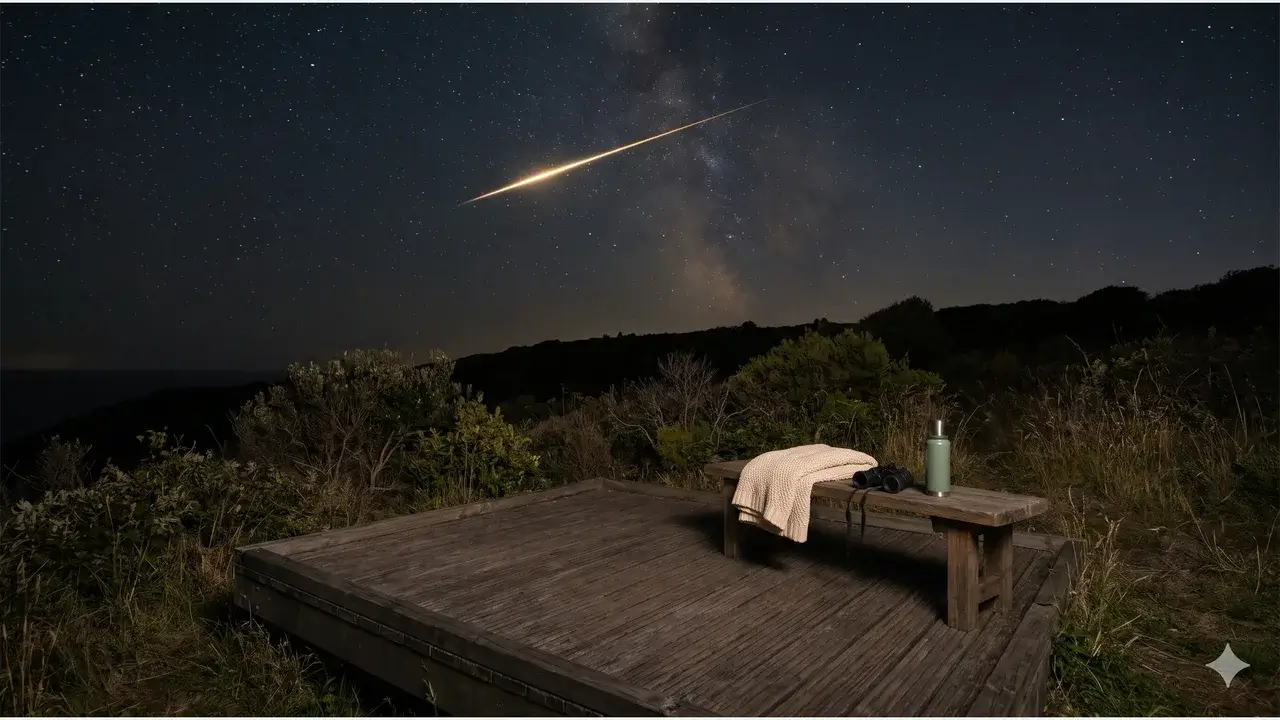
What kind of meteor shower are the Taurids?
The Taurids split into a South branch and a North branch, and the institute's table lists a separate peak for each. NASA's comet page names comet Encke (2P/Encke) as the parent of the stream. Encke takes 3.30 years to orbit the Sun once.
What stands out about this shower is its fireballs. NASA describes a fireball as a meteor as bright as Venus or brighter, and says the shower often produces them around Halloween, which is why they are sometimes called the Halloween fireballs. They come from larger bits of cometary material, so they last longer than ordinary meteors and can show color.
When do they peak?
The sources use different criteria, so the peak dates differ by about a day.
| Branch | Peak | Source | Note |
|---|---|---|---|
| South | Nov 6 (Fri) 03:45 | Korea Astronomy and Space Science Institute table (NASA basis), ZHR 10 | The Moon rises at 03:47 |
| South | Night of Nov 4 to 5 | American Meteor Society | The fireball-swarm component peaks Nov 5; the Moon is a 25% crescent |
| North | Nov 13 (Fri) 03:02 | Korea Astronomy and Space Science Institute table (NASA basis), ZHR 15 | The Moon sets at 19:07 on the 12th |
| North | Night of Nov 11 to 12 | American Meteor Society | The Moon is a 4% crescent |
Checked on October 23, 2026. The American Meteor Society also lists activity periods: the South branch from September 20 to November 20, the North branch from October 20 to December 10. It says fireball counts can climb in late October and early November, when both branches are active together.
When is the sky free of moonlight?
Fireballs are bright enough to show through moonlight, but faint meteors get washed out. Choosing moon-free hours lets you catch more. All times are Korean time from the institute's monthly table.
| Date (day) | Moon | Moon-free hours |
|---|---|---|
| Oct 24 (Sat) | Sets at 04:24 | From 04:24 until sunrise at 06:49 |
| Oct 26 (Mon) | Full Moon at 13:12, rises at 17:23 | The full Moon is up all night |
| Oct 31 (Sat) | Rises at 22:03 | From sunset at 17:35 until 22:03 |
| Nov 2 (Mon) | Rises at 00:29 on the 3rd | From sunset at 17:33 until 00:29 on the 3rd |
| Night of Nov 5 (Thu) | Sets at 15:12, rises at 03:47 on the 6th | From sunset at 17:30 until 03:47 on the 6th; the peak is at 03:45 |
| Nov 11 (Wed) | Sets at 18:18 | From 18:18 until sunrise at 07:08 on the 12th |
| Nov 12 (Thu) | Sets at 19:07 | From 19:07 until sunrise at 07:09 on the 13th |
Checked on October 23, 2026, from the institute's monthly astronomical events table. Times can vary by location.
Avoid the nights around the October 26 full Moon, when the Moon stays up all night. On October 31 and the first days of November the Moon rises late, so you can go out early in the evening.
How many will I see?
The institute lists a ZHR of 10 for the South branch and 15 for the North branch. It explains that ZHR assumes the radiant is overhead on a clear night when stars down to magnitude 6.5 are visible, so what you actually see is lower.
NASA's 2011 guide gives about 5 per hour for the Taurids, a low rate with the occasional bright fireball. It says the shower has many fireballs because it carries more large particles than a typical shower. Plan to spend a long time looking up rather than expect several in an hour.
How do I find a fireball?
Don't stare at one spot near Taurus. Take in as much of the sky as you can. A fireball is gone after one pass, so the longer you keep your eyes on the sky, the better. Dark adaptation and a reclined posture are covered in how to watch a meteor shower with the naked eye.
- Pick moon-free hours from the table above.
- Go to an open spot where street lamps are not shining straight into your eyes.
- Lower your phone's screen brightness and do not count meteors for the first few minutes.
- Keep watching the sky for an hour or two on either side of the peak time.
November mornings are cold. Bring a coat and a thermos, and watch your footing and car headlights on dark roads.
What if the weather is bad?
The shower runs for a long time, so you can pick another night if the peak dawn is cloudy. The South branch is active until November 20 and the North branch until December 10. Around the November 24 full Moon at 23:53, though, the Moon stays bright all night and meteors are hard to see.
Before you leave, check the Korea Meteorological Administration's cloud forecast and that night's moonrise in the institute's table. The full schedule of peaks is gathered date by date in the November 2026 night sky calendar.
Frequently Asked Questions
How many fireballs can I expect per hour?
There is no fixed number. The Korea Astronomy and Space Science Institute table lists a ZHR of 10 for the South Taurids and 15 for the North Taurids, and says the number you actually see is lower. NASA's 2011 guide puts the rate at about 5 per hour, low, but with bright fireballs now and then.
If I can only go out on one of November 6 or 13, which is better?
November 13 is darker. The Moon sets at 19:07 the evening before and is gone all night, while on November 6 it rises at 03:47, right around the peak. If you can go on both, the hours before moonrise on the night of November 5 are also fine.
Can I not see them at all when the Moon is up?
Bright meteors can still show through moonlight. The American Meteor Society says a Moon above the horizon causes heavy interference but brighter meteors remain visible. Faint ones get lost in the glow, so moon-free hours are the better pick.
Sources & Verification Date
- Korea Astronomy and Space Science Institute: monthly astronomical events (October and November 2026) · Verified
- NASA: comet 2P/Encke · Verified
- NASA Watch the Skies, November 8, 2011: Taurids Dust the November Sky · Verified
- American Meteor Society: 2026-2027 meteor shower calendar · Verified
All materials have been verified from official announcements and may have changed since verification.