Check When to Watch the 2026 Leonid Meteor Shower in the Early Hours of November 17 and 18
This page contains Coupang Partners affiliate links; the operator may earn a commission.
Key Takeaway
KASI's table lists the Leonid meteor shower peak at 08:45 on Wednesday, November 18 (IMO basis), but that is after sunrise, so you cannot see it.
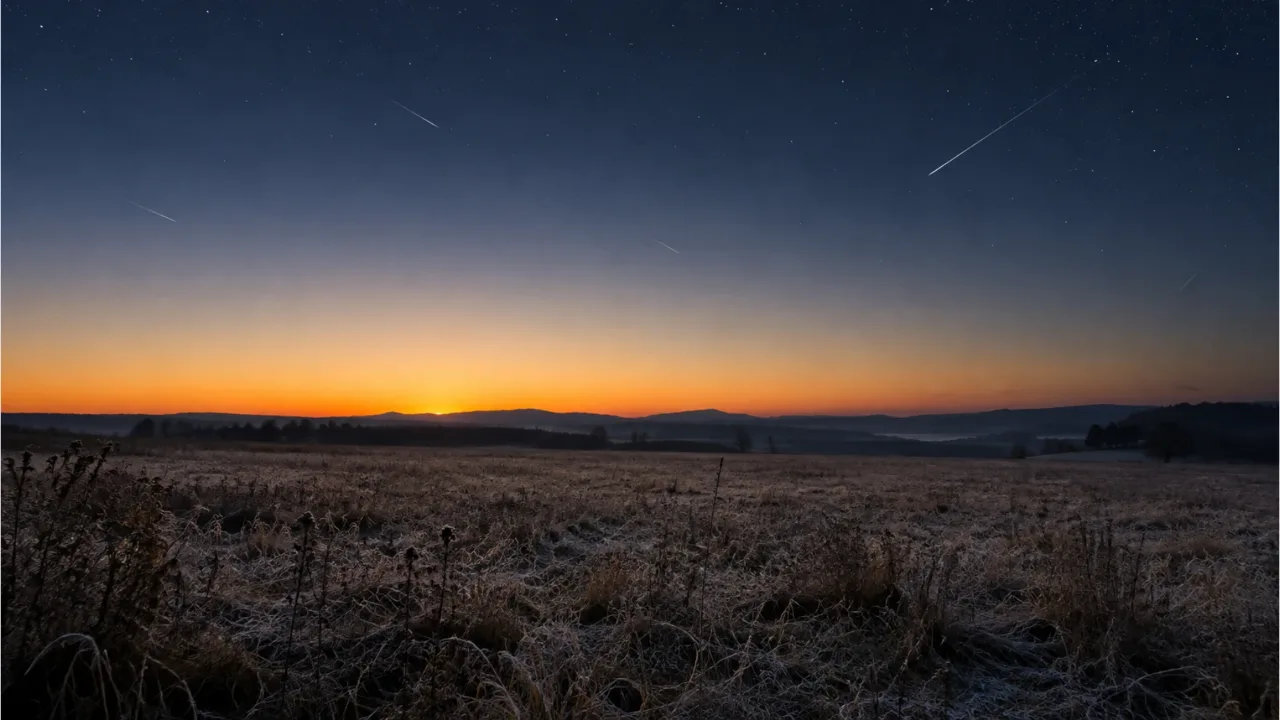
Watch in the early hours before dawn, and go expecting only a few meteors.
If the peak is in daylight, when should you watch?
The Korea Astronomy and Space Science Institute (KASI) monthly table for November lists the Leonid peak (ZHR=15, IMO basis) at 08:45 on November 18. Sunrise that day is 07:15, so the peak falls after the Sun is up.
NASA gives the active period as November 6 to 30 and the peak night as November 16 to 17. It says the best time to watch is from around midnight until dawn. These values are the schedule checked on October 13, so look again as November approaches.
When does the moonlight go away?
Based on KASI's table, these are the moonset times and sunrise for November 16 through 19.
| Night | Moonset | Sunrise | Note |
|---|---|---|---|
| Night of November 16 | 23:01 on the 16th | 07:13 on the 17th | NASA peak night |
| Night of November 17 | 00:01 on the 18th | 07:15 on the 18th | First quarter on November 17 at 20:48 |
| Night of November 18 | 01:03 on the 19th | 07:16 on the 19th | Moonset gets later |
This is as checked on 2026-10-13, from KASI's monthly astronomical events. Sunrise and moonset times come from the date cells of the same table.
On NASA's peak night, the Moon sets at 23:01, so you can watch without moonlight from around midnight. On the night closest to KASI's peak time, the Moon sets at 00:01 on the 18th, and the hours before dawn after that are dark.
How many will you see?
The two institutions' values differ, so I list both.
- The ZHR in KASI's table is 15.
- NASA says fewer than 3 per hour under dark skies.
ZHR is a value for ideal conditions, so the number you actually see may be lower. It is easier on your mood to assume you will see fewer than the Orionids (10 to 20 per hour, per NASA).
How should you watch?
Just follow NASA's guidance.
- Go somewhere far from the city and streetlights.
- Lie on your back with your feet pointing east.
- Take in as much of the sky as you can.
- Let your eyes adapt to the dark for about 30 minutes.
NASA also says not to look only toward Leo. Looking far from the center makes meteors look long, while looking straight at the center makes them look short. For the basics, see the article on naked-eye observing.
What should you prepare for November?
Dawn temperatures are dropping by then. Bring a thick coat, a blanket, and a warm drink. Check the cloud forecast before you leave, and if it is cloudy, pick a clear dawn before November 30, the end of NASA's active period.
The Orionids come first, on October 22. Practicing under dark skies that day to get your eyes used to the dark will help in November.
Frequently Asked Questions
If the peak is in daylight, can I not watch it?
The peak at 08:45 comes after sunrise at 07:15, so you cannot see that moment. NASA advises watching from around midnight until dawn, so aim for the night hours before sunrise.
Why do KASI's table and NASA give different dates?
KASI's table gives the IMO-based peak as November 18 at 08:45, while NASA lists the peak night as November 16 to 17. The bases differ, so I included both values.
Which should I believe, 15 per hour or fewer than 3?
The 15 is the ZHR value in KASI's table, and NASA's fewer than 3 is the number actually visible under dark skies. They mean different things. Go with NASA's figure and lower your expectations.
Sources & Verification Date
- Korea Astronomy and Space Science Institute (KASI) monthly astronomical events, November 2026 · Verified
- NASA guide to the Leonid meteor shower · Verified
All materials have been verified from official announcements and may have changed since verification.