Check What Time to Watch the 2026 Orionid Meteor Shower on October 22
This page contains Coupang Partners affiliate links; the operator may earn a commission.
Key Takeaway
The Orionid meteor shower peaks at 03:16 on Thursday, October 22, and the Moon sets at 02:16 that day. The good window runs from moonset until before sunrise.
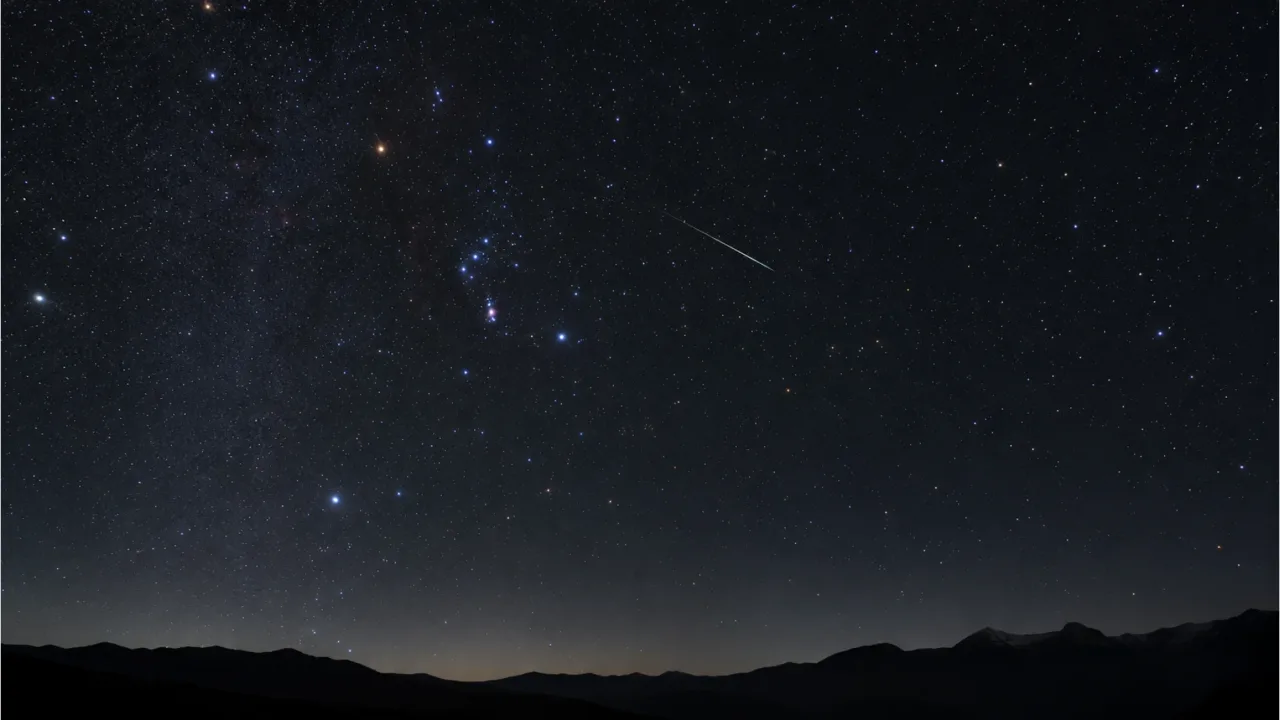
When exactly is the peak?
KASI's monthly astronomical events table lists the Orionid peak (ZHR=20, NASA basis) at 03:16 on October 22. NASA gives the active period as October 2 to November 7 and the peak night as October 21 to 22.
ZHR is the number of meteors you could see in an hour under ideal conditions. NASA says 10 to 20 per hour are visible under dark skies. The number you actually see varies with clouds and surrounding lights.
How much will moonlight matter?
On this peak night the Moon stays up fairly late. Per KASI's table, the Moon on October 22 is 11.8 days old. Compare the moonset times for the nights in the table below.
| Night | Moonset | Sunrise | Note |
|---|---|---|---|
| Night of October 21 into the early hours of the 22nd | 02:16 on the 22nd | 06:47 on the 22nd | Peak at 03:16, about 1 hour after moonset |
| Night of October 22 into the early hours of the 23rd | 03:19 on the 23rd | 06:48 on the 23rd | Moonset is almost an hour later |
This is as checked on 2026-10-13, from KASI's monthly astronomical events.
Before the Moon sets, moonlight brightens the sky and makes faint meteors hard to see. After 02:16 you get a darker sky. The sky brightens before sunrise, so wrap up well before it.
Where and how should you look?
NASA advises lying on your back and taking in as much of the sky as you can. In the Northern Hemisphere, it says to point your feet southeast. Korea is in the Northern Hemisphere too, so you can follow that as is.
Meteors appear to radiate from near Betelgeuse, the bright star in Orion, but you do not need to watch a single point. NASA says to look 45 to 90 degrees away from the center, because meteors look longer there.
How long do your eyes take to adapt to the dark?
NASA's guidance says meteors start to appear after a little under 30 minutes in the dark. Do not try to count the moment you step outside; just look at the sky for 10 to 20 minutes.
Turning on your phone screen in the meantime resets your eyes to the bright. Dim it or keep it in your pocket.
What should you bring?
It is the early hours, so the temperature can drop. Pack these.
- A thick coat and a blanket
- A mat or folding chair for the ground
- A warm drink
- A weather forecast check before you leave
- A wide spot without streetlights or car headlights
You can see meteors even in a city, but the darker the place, the more you will see.
Frequently Asked Questions
Do I have to watch exactly at the 03:16 peak?
No. NASA advises watching from after midnight until dawn, and the good window runs from the 02:16 moonset until before sunrise.
Should I only look at Orion?
No. Meteors appear in many parts of the sky. NASA says that looking 45 to 90 degrees away from the central star makes meteors look longer.
What if it is cloudy on October 22?
NASA gives the active period as running through November 7. The count can drop the further you are from the peak, though, so check the forecast and pick a clear dawn close to the peak.
Sources & Verification Date
- Korea Astronomy and Space Science Institute (KASI) monthly astronomical events, October 2026 · Verified
- NASA guide to the Orionid meteor shower · Verified
All materials have been verified from official announcements and may have changed since verification.