Check the November 2026 Night Sky Schedule Date by Date
Key Takeaway
New Moon falls on Monday, November 9, 2026, making that week the darkest of the month. You can watch the Northern Taurids before dawn on the 13th and the Leonids before dawn on the 18th with little moonlight.
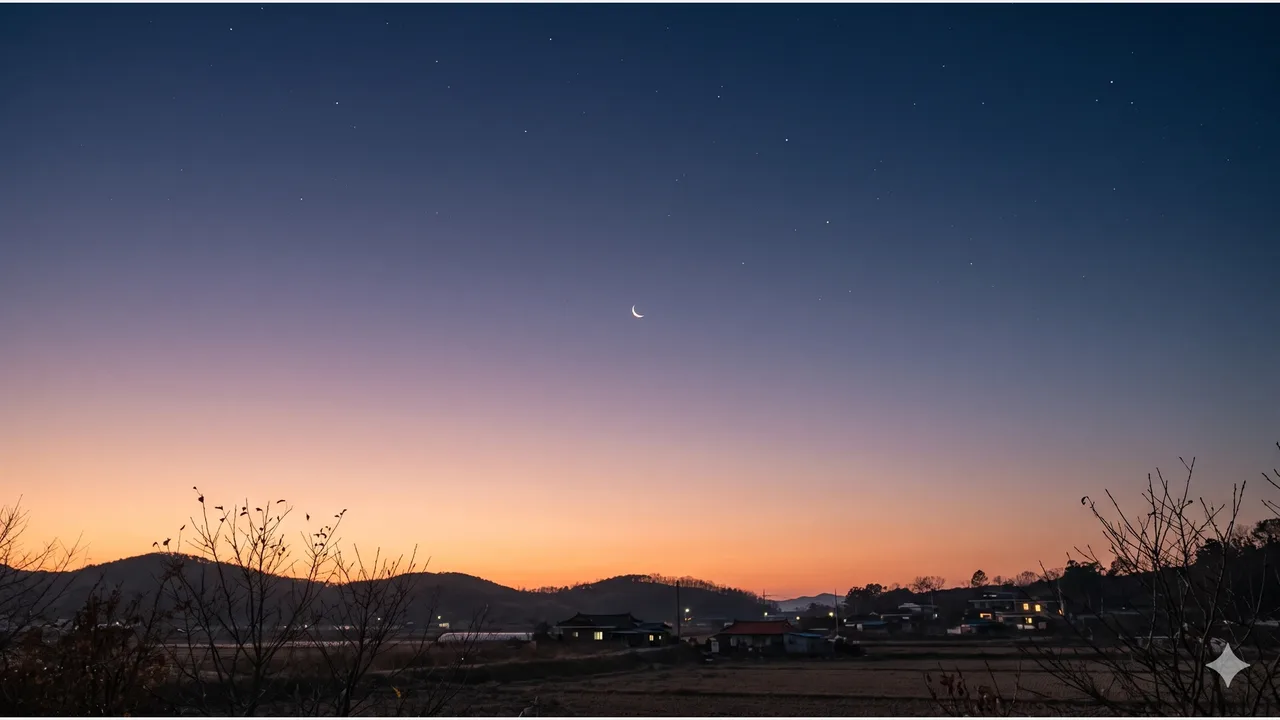
All times below are Korea time from KASI's November table, checked on October 17.
What is on the calendar for November?
| Date (day) | Korea time | Event | Notes |
|---|---|---|---|
| Nov 2 (Mon) | 01:34 | Moon near the Beehive Cluster (0.2°) | Last quarter at 05:28 the same day |
| Nov 2 (Mon) | 23:23 | Moon near Mars (1.1°) | The Moon rises at 00:29 on the 3rd |
| Nov 4 (Wed) | 23:00 | Inferior conjunction of Mercury | Mercury passes between the Sun and Earth |
| Nov 6 (Fri) | 03:45 | Southern Taurids peak (ZHR=10, NASA basis) | A thin waning crescent rises at 03:47 |
| Nov 9 (Mon) | 16:02 | New Moon | The week with the least moonlight |
| Nov 10 (Tue) | 22:31 | Venus near Spica (0.9°) | |
| Nov 13 (Fri) | 03:02 | Northern Taurids peak (ZHR=15, NASA basis) | The Moon sets at 19:07 on the 12th |
| Nov 17 (Tue) | 20:48 | First quarter | |
| Nov 18 (Wed) | 08:45 | Leonids peak (ZHR=15, IMO basis) | After sunrise at 07:15 |
| Nov 21 (Sat) | 09:00 | Greatest western elongation of Mercury (20°) | |
| Nov 24 (Tue) | 20:18 | Moon near the Pleiades (0.9°) | Full Moon at 23:53 the same day |
| Nov 26 (Thu) | 08:00 | Opposition of Uranus | Moon at perigee at 05:58 |
| Nov 29 (Sun) | 23:00 | Venus at greatest illuminated area | |
| Nov 30 (Mon) | 23:35 | Moon near Regulus (1.1°) |
Checked 2026-10-17; source: KASI monthly astronomical events. The NASA and IMO labels next to each ZHR are copied as written in the table.
The table does not say whether each object is above the horizon in Korea at the time of a close approach. For approaches listed at night, such as Venus and Spica, check the altitude in an astronomy app before heading out.
When is the moonlight weakest?
To see meteor showers or faint clusters, pick a time after moonset or before moonrise. November is centered on the new Moon of the 9th, so moonlight is less of a worry.
- Before dawn on November 6, the waning crescent rises at 03:47, almost the same time as the Southern Taurid peak at 03:45. The Moon is very thin, so it does little harm.
- Before dawn on November 13, the Moon has set at 19:07 on the 12th, so there is no Moon in the sky around the 03:02 peak.
- On the night of November 17, the first-quarter Moon sets at 00:01 on the 18th. For the Leonids, the hours after that are dark.
- Around the full Moon on November 24, the Moon is up all night, which is poor for meteor showers.
These are the two dates to remember: before dawn on the 13th and on the 18th.

How much should you expect from the Leonids?
KASI's table gives a ZHR of 15, and NASA says to expect fewer than 3 per hour under dark skies. NASA lists the active period as November 6 to 30 and the peak night as November 16 to 17.
Because the two sources use different bases, their peak dates differ by a day. Pick whichever of the nights of the 16th and 17th looks clearer. Hour-by-hour moonset times are in the separate Leonids post.
When should you look for Mercury and Venus?
Mercury reaches greatest western elongation of 20° at 09:00 on November 21. Western elongation is when Mercury rises before the Sun and shows up in the eastern sky before dawn. Sunrise on the 21st is at 07:18, so look before then from a spot with an open eastern horizon.
Venus passes its stationary point (west to east) at 00:00 on November 12, and the table lists "Venus at greatest illuminated area" at 23:00 on the 29th. The table does not give the time Venus rises that day, so check when and where it rises in an astronomy app first.
Which dates are easiest for the naked eye?
Dates when the Moon passes a star are the easiest. At 8:18 p.m. on November 24, the Moon comes within 0.9° of the Pleiades. It is just before full Moon and very bright, so the cluster's small stars show up better through binoculars.
At 11:35 p.m. on November 30, the Moon comes within 1.1° of Regulus, the brightest star in Leo. The Moon rises at 23:29 that night, so at the time of the approach it sits just above the eastern horizon.
What if the weather is bad?
According to NASA, the Leonids stay active until November 30. If it is cloudy around the peak, try before dawn on the 19th and 20th. The Moon sets at 01:03 and 02:05 respectively, so the sky is dark after that. After the full Moon on the 24th, the Moon stays up until dawn and meteors become hard to see. Before you set out, check the Korea Meteorological Administration cloud forecast and look up that day's moonset time in KASI's table once more.
Frequently Asked Questions
What is the easiest thing to see with the naked eye in November?
The Moon passing close to a star or a cluster. At 20:18 on November 24 the Moon comes within 0.9° of the Pleiades, and at 23:35 on November 30 it comes within 1.1° of Regulus. Both happen in the evening or at night, so they are easy to find even from a city.
Can I see Uranus at opposition with the naked eye?
KASI's table only gives the opposition at 08:00 on November 26 and does not list its brightness. It is two days after full Moon, and the Moon rises at 18:34 and stays bright all night. That makes it hard to find with the naked eye. Check its position in an astronomy app first and use binoculars or a telescope.
When is the darkest time in November for meteor showers?
New Moon is on November 9, so the days around it are the darkest. At the Northern Taurid peak at 03:02 on November 13, the Moon has already set at 19:07 the previous evening. The Leonid peak at 08:45 on November 18 comes after sunrise, so watch in the early hours before dawn.
Sources & Verification Date
- Korea Astronomy and Space Science Institute (KASI) monthly astronomical events, November 2026 · Verified
- NASA guide to the Leonid meteor shower · Verified
All materials have been verified from official announcements and may have changed since verification.