Find the Andromeda Galaxy from the Great Square of Pegasus This Autumn
Key Takeaway
Start at the northeast corner of the Great Square of Pegasus and hop two stars along to find the Andromeda Galaxy.
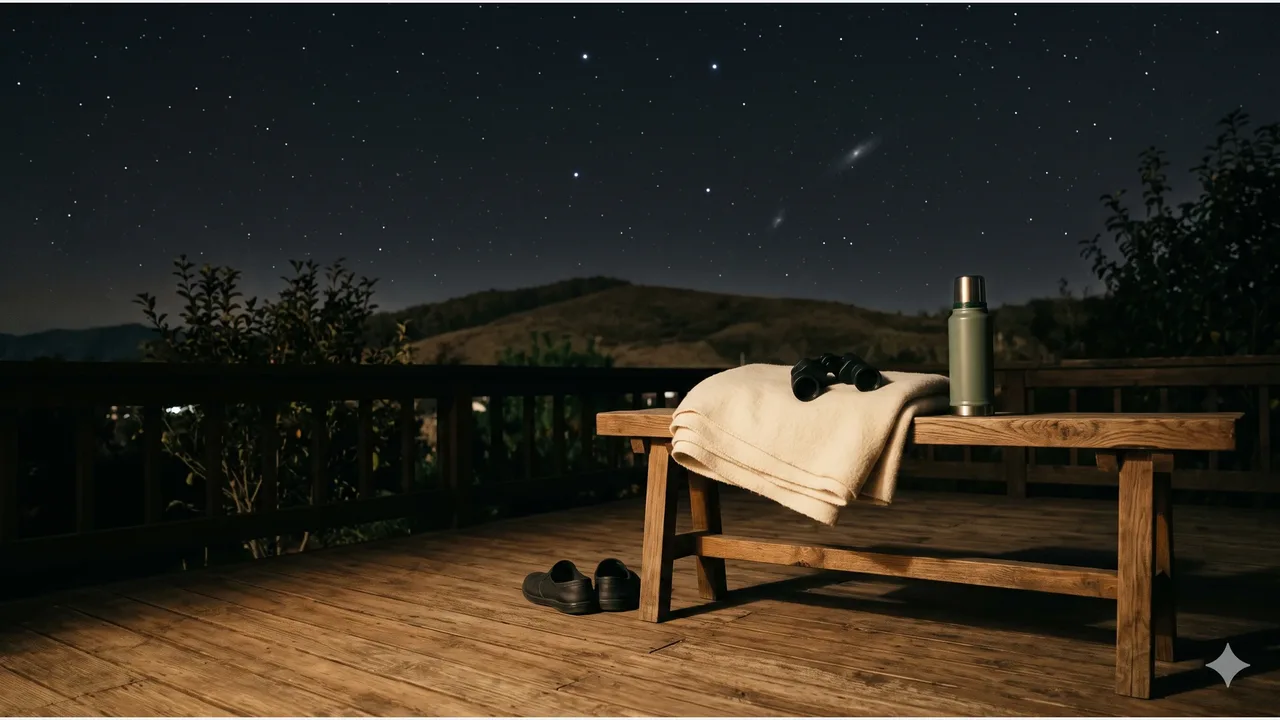
In 2026 the best window runs from late October to around November 13, when the Moon is out of the evening sky.
This guide covers what the galaxy is, when to go out, how to find the Square, the star hop to the galaxy, and what it looks like in binoculars.
What is the Andromeda Galaxy?
It is number 31 in the Messier catalog, so it is also called M31. NASA's Hubble Messier Catalog puts it about 2.5 million light-years away at an apparent magnitude of 3.1 and says it is best observed in November.
Sources differ on whether you can see it with the naked eye. The Hubble page says it is easy to see from a dark site, while NASA's classroom activity says you need binoculars. If it is your first time, take binoculars with you.
When should I look for it in 2026?
NASA's activity says that around 9 p.m. on autumn evenings the four stars of the Great Square are high overhead. The same activity names a night without the Moon and a dark site as conditions.
So choose the date by when the Moon rises and sets.
| Date (day) | Sunset | Moon | Sky at 9 p.m. |
|---|---|---|---|
| Oct 22 (Thu) | 17:46 | Rises 15:35, sets 03:19 on Oct 23 | Moon is up |
| Oct 26 (Mon) | 17:41 | Full Moon at 13:12, rises 17:23 | Full Moon all night |
| Oct 31 (Sat) | 17:35 | Rises 22:03 | No Moon until 22:00 |
| Nov 3 (Tue) | 17:32 | Rises 00:29 | No Moon until midnight |
| Nov 9 (Mon) | 17:26 | New Moon at 16:02, sets 17:00 | No Moon all night |
| Nov 13 (Fri) | 17:23 | Sets 20:01 | Dark after moonset |
Checked on 2026-10-19 against the Korea Astronomy and Space Science Institute monthly table. Times can differ by location.
From November 2 to 8 the Moon rises after midnight. That is the easiest week for an evening session.
How do I find the Great Square of Pegasus?
Find Polaris in the north first, then look up overhead. Four bright stars forming a large square are the Great Square of Pegasus.
If you lose your bearings, find Cassiopeia as well. NASA's activity describes Cassiopeia north of the Square as five stars in a W or M shape. When you face north, east is on your right, so your starting point is the corner of the Square that sits toward Cassiopeia and to the east.
How do I hop from the Square to the galaxy?
These are the steps from NASA's activity.
- Find the northeast corner of the Square.
- From that corner, find three bright stars in a long line that arcs from west to east, just south of Cassiopeia.
- From the middle of those three stars, head north toward Cassiopeia. Pass one star and go on to a second star.
- The Andromeda Galaxy is near that second star.
Start by tracing the stars with your naked eye, and raise the binoculars only once you reach the second star. Binoculars show a smaller patch of sky than your eyes, so it is easy to lose your place if you hop with them from the start.
What does it look like in binoculars?
NASA's activity describes a bright oval set in the middle of a long swath of light. Look for an elongated, blurry glow in the field of view.
Focus before you head out by aiming at a distant hill or building. The focusing steps and steadier holding positions are in Learn the Basics of Stargazing with Binoculars. A bright phone screen makes your eyes adapt to the dark all over again, so turn the brightness down beforehand.
What if I am in the city or it is cloudy?
Start by moving to a spot where streetlights do not shine straight into your eyes. The Hubble page says the galaxy is visible even with moderate light pollution, but NASA's activity lists a dark site as a condition. A spot with the lights behind you and an open view of the sky works best.
If clouds cover the Square, there is no way to find it. November evenings are cold, so bring a warm layer, and watch your footing and car headlights on dark roads. Before you go, check that night's moonrise time in the Korea Astronomy and Space Science Institute table. For choosing dates by moonset, see Use Moonset Times to Pick a Good Night for Stargazing.
Frequently Asked Questions
Can I see the Andromeda Galaxy with the naked eye?
NASA's two pages put it a little differently. The Hubble Messier Catalog says it is easy to see with the unaided eye from a dark site and visible even with moderate light pollution. NASA's classroom activity says you will need binoculars. For a first attempt, bringing binoculars is the safer choice.
Do I need a telescope?
No, binoculars are enough. NASA's activity presents the Andromeda Galaxy as a binocular target and says it looks like a bright oval set in the middle of a long swath of light.
Can I look for it around the October 26 full Moon?
It is not a good time. NASA's activity lists a night without the Moon as a condition. In the Korea Astronomy and Space Science Institute table, the full Moon falls at 13:12 on October 26 and the Moon rises at 17:23, staying up all night. Pick an evening from October 31 onward, when the Moon rises after 22:00.
Sources & Verification Date
- NASA Imagine the Universe: finding galaxies in the autumn sky · Verified
- NASA Hubble Messier Catalog: Messier 31 · Verified
- Korea Astronomy and Space Science Institute: monthly astronomical events (October and November 2026) · Verified
All materials have been verified from official announcements and may have changed since verification.