Use Moonset Times to Pick a Good Night for Stargazing
Key Takeaway
To see stars without moonlight, pick the time between moonset and the next moonrise.
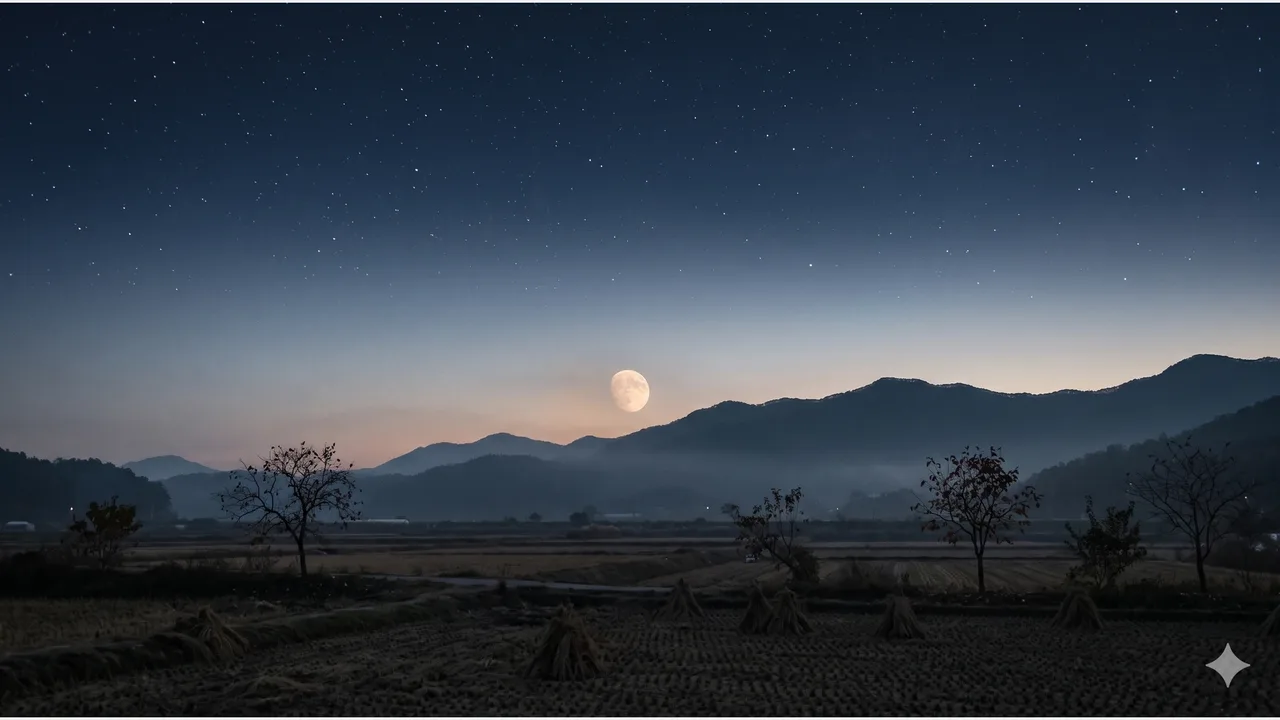
When the Moon rises and sets depends on its phase, so the moonset and moonrise columns in KASI's monthly table show you the dark hours for any night.
When is the Moon up in each phase?
NASA explains that the Moon's phases repeat about every 29.5 days and that the Moon rises a little later each day. Here is when it rises and sets in each phase.
| Phase | Rises | Sets | When the night sky is dark |
|---|---|---|---|
| Waxing crescent | Morning, after sunrise | Night, after sunset | All night after it sets |
| First quarter | Around midday | Around the middle of the night | From midnight to dawn |
| Full Moon | Around sunset | Around sunrise | Hardly at all |
| Last quarter | Around the middle of the night | Around midday | From sunset until before midnight |
| Waning crescent | Early morning, before sunrise | Afternoon, before sunset | From early evening until before dawn |
Checked 2026-10-17; rise and set times follow NASA's guide to Moon phases. The last column is worked out backward from those times.
In short, the few days around new Moon are the darkest, and the days around full Moon are the brightest. Around first and last quarter, you can use roughly half the night.
How do you read KASI's table?
Each date cell in the monthly astronomical events table lists the lunar date and Moon age, that day's events, and the sunrise, sunset, moonrise and moonset times. When choosing a night, read them in this order.
- Check the Moon age. In the November 2026 table, new Moon on the 9th shows a Moon age of 0.2, and full Moon on the 24th shows 15.2.
- Check that day's moonset time. Once the Moon sets, there is no moonlight after that.
- Check the next day's sunrise. That is the end of your observing window for the night.
- If moonrise falls during the night, the sky gets brighter again from that time.
If moonrise or moonset shows --:--, it does not happen within that date. In that case, read the cells for the days before and after.
What does this look like on real dates?
Here are two nights compared using the November 2026 table.
| Date | Moon age | Moonset | Next sunrise | Dark hours |
|---|---|---|---|---|
| Night of Nov 12 (Thu) | 3.2 | 19:07 on the 12th | 07:09 on the 13th | From 19:07 until dawn |
| Night of Nov 17 (Tue) | 8.2 | 00:01 on the 18th | 07:15 on the 18th | From midnight until dawn |
Checked 2026-10-17; source: KASI monthly astronomical events, November 2026.
On the night of the 12th, the crescent Moon sets early in the evening, so most of the night is dark. The night of the 17th is around first quarter, so the Moon does not set until after midnight. That is also why moonset on the 17th is blank (--:--) in the table.
How do you check times for your own observing site?
The monthly astronomical events table only lets you choose a year and month; there is no field for an address. On days when you travel far, it is worth looking up that location separately. Enter a date and address in KASI's sunrise and sunset time calculator, and it shows the Sun and Moon rise and set times for that spot in Korea Standard Time.
The page notes that these calculated values may differ slightly from the monthly Sun and Moon rise and set data. Use them as a guide for when to start observing, and leave yourself time to arrive.
What else should you check once the weather is in the picture?
Moonset times are fixed months ahead, but clouds are not. Pick two or three candidate dates, then choose the least cloudy night from the Korea Meteorological Administration forecast the day before you go. Your eyes need time to adjust to the dark after the Moon sets, so it helps to arrive a little before moonset and get settled.
Frequently Asked Questions
What does it mean when the table shows moonset as --:--?
It means the Moon does not set within that calendar date. In KASI's November 2026 table, moonset on the 17th is --:--, and the Moon sets at 00:01 on the very next day, the 18th. In that case, read the next day's cell as well.
Can I see stars at full Moon?
You can see bright stars and planets. As NASA explains, though, the full Moon rises around sunset and sets around sunrise, so the sky stays bright all night. For faint targets like meteor showers or the Milky Way, it is better to avoid the days around full Moon.
How do I find the times for my observing site?
Enter a date and an address in KASI's sunrise and sunset time calculator to get the Sun and Moon rise and set times for that location in Korea Standard Time. The page itself notes that its values may differ slightly from the monthly tables.
Sources & Verification Date
- NASA guide to Moon phases · Verified
- Korea Astronomy and Space Science Institute (KASI) monthly astronomical events, November 2026 · Verified
- Korea Astronomy and Space Science Institute (KASI) sunrise and sunset time calculator · Verified
All materials have been verified from official announcements and may have changed since verification.