Try Watching a Meteor Shower With Just Your Eyes, No Equipment Needed
This page contains Coupang Partners affiliate links; the operator may earn a commission.
Key Takeaway
To watch a meteor shower, lie on your back, take in as much sky as you can, and give your eyes about 30 minutes in the dark.
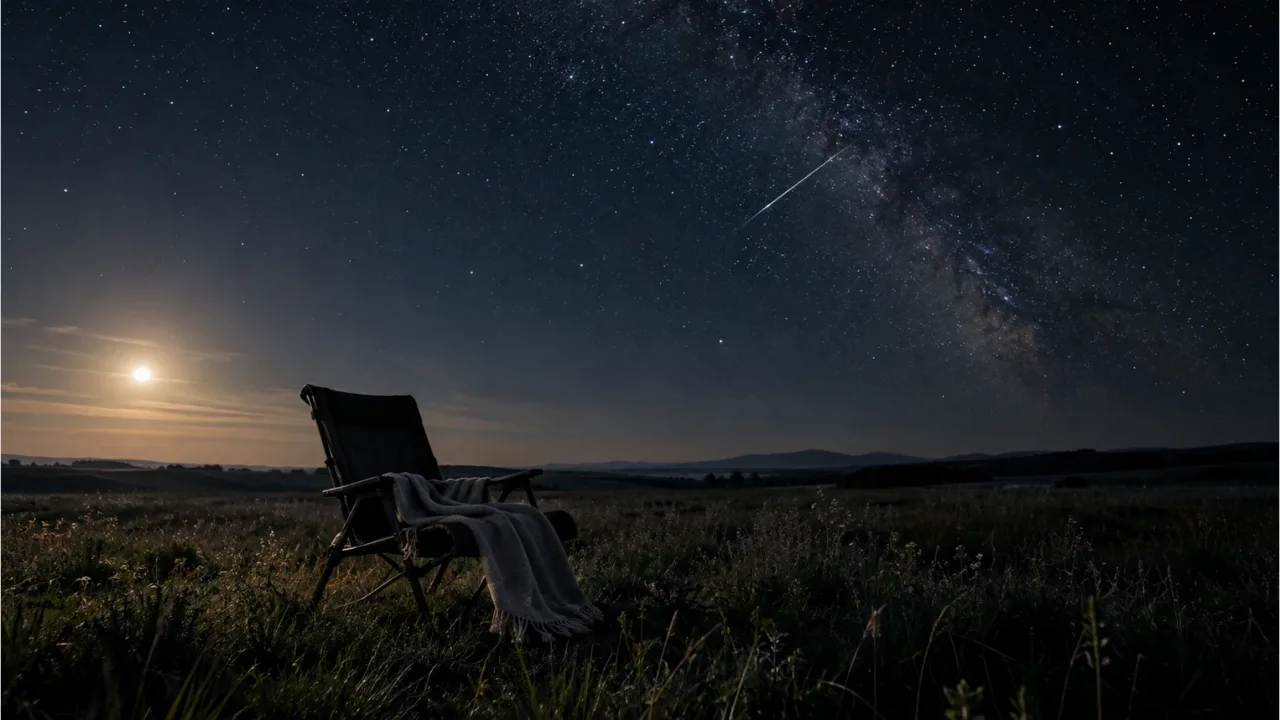
This article lays out posture, direction, and timing from NASA guidance and compares the Orionids and Leonids.
Why does posture matter more than equipment?
NASA's guides to the Orionid and Leonid meteor showers say the same thing: lie down and look at as much of the sky as you can. Meteors seem to come from a single point, but they show up all over the sky. So taking in the whole sky works better than equipment that narrows your view.
Spend your preparation on a mat and warm clothes rather than gear. Looking wide instead of narrow is the basic skill.
Which part of the sky should you watch?
In NASA's guidance, the direction your feet should point differs by shower. In the Northern Hemisphere, it says to point your feet southeast for the Orionids and east for the Leonids. If you lie with your feet that way, the part of the sky where meteors appear naturally falls into your view.
NASA also says not to stare straight at the constellation at the center. Looking 45 to 90 degrees away from the center makes meteors look longer, while looking right at the center makes them look short.
How do the Orionids and Leonids differ?
| Item | Orionid meteor shower | Leonid meteor shower |
|---|---|---|
| Active period (NASA) | October 2 to November 7 | November 6 to November 30 |
| Peak night (NASA) | October 21 to 22 | November 16 to 17 |
| Peak time per KASI | October 22, 03:16 | November 18, 08:45 |
| Meteors per hour (NASA) | 10 to 20 under dark skies | Fewer than 3 under dark skies |
| Direction for feet (NASA) | Southeast | East |
| Best time to watch (NASA) | After midnight until dawn | From around midnight until dawn |
These are as checked on 2026-10-13, from NASA's two guides and KASI's monthly astronomical events. KASI's peak times are listed on the IMO basis for the Leonids and the NASA basis for the Orionids. NASA's Leonid peak night and KASI's peak date differ by a day or two, so I listed the two values separately.
How long should your eyes adapt to the dark?
The Leonid guide says to spend about 30 minutes in the dark to let your eyes adapt. The Orionid guide says meteors start to appear in a little under 30 minutes.
While your eyes adjust, try this.
- Settle your spot to lie on first.
- Dim your phone screen or put it away.
- For the first 10 minutes, do not count; just take in the whole sky.
- If you get cold, wrap yourself in a blanket instead of getting up.
What time should you go out?
NASA recommends the hours from after midnight until dawn for both showers. On nights when the Moon is up, set your time around when the Moon sets. You can find moonset times in KASI's monthly astronomical events table.
Weather is the biggest variable. Check the cloud forecast before you head out, and if it is cloudy, put it off to another night.
Frequently Asked Questions
Do I need a telescope to watch a meteor shower?
NASA's guidance covers posture, direction, and time to adapt to the dark rather than equipment. You need to take in a wide part of the sky, so start with your naked eyes.
Is it a problem to look in just one direction?
NASA advises looking at as much of the sky as you can. It also explains that if you look straight at the center where the meteors seem to come from, they look short.
How long does it take for my eyes to adapt to the dark?
NASA's guidance says about 30 minutes. If you keep turning on your phone screen in the meantime, your adaptation resets, so dim it or put the phone away.
Sources & Verification Date
- NASA guide to the Orionid meteor shower · Verified
- NASA guide to the Leonid meteor shower · Verified
- Korea Astronomy and Space Science Institute (KASI) monthly astronomical events · Verified
All materials have been verified from official announcements and may have changed since verification.